Follow us on Social-NZ

What is a Net Zero Home?

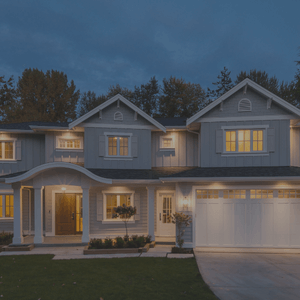
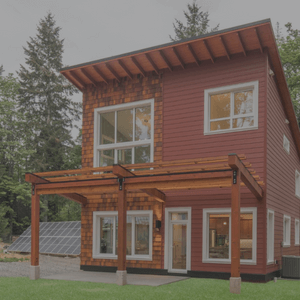
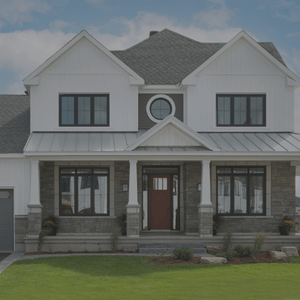
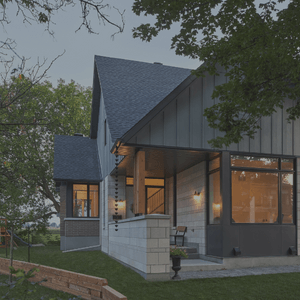
Net Zero Homes, whether new or renovated, produce as much clean energy as they consume. They are far more energy efficient than typical new homes and greatly reduce your impact on the environment. Every part of the house works together to provide consistent temperatures throughout, prevent drafts, and filter indoor air to reduce dust and allergens. The result: exceptional energy performance and the ultimate in comfort – a home at the forefront of sustainability. It all adds up to a better living experience.
The people behind the movement.

Since 1943, CHBA has been the voice of Canada’s residential construction industry. Representing one of Canada's largest industry sectors, our membership is made up of some 8,500 companies – including builders, renovators, developers, trade contractors, manufacturers, suppliers, lending institutions, insurance providers, and service professionals.

Learn More

Why live in a net zero home?

Net Zero Homes Through Renovations

  • A Net Zero Home produces as much energy as it consumes. It has been designed and constructed for optimal energy efficiency and cost.
  • With a Net Zero Home, your utility bills will fall to an all-time low, and stay low all year round.
  • A Net Zero Home protects you from future increases in energy prices. Over the years, that could be a very big deal.
  • Built to higher standards than conventional new homes, a Net Zero Home is more durable – with high performance, warm windows and better insulated walls and roof.

  • A Net Zero Home delivers exceptional comfort all year round. Advanced construction methods and materials along with superior heating, cooling and ventilation equipment means more even temperatures throughout the house.
  • Exceptional indoor air quality for healthier living. A built-in filtered fresh air system reduces allergens and asthma triggers, such as dust, pollen and outdoor air pollution.
  • Tightly built and well insulated, a Net Zero Home is quieter. Outside noise such as traffic, lawnmowers and barking dogs are virtually silenced.

  • By purchasing a Net Zero Home, you’re doing your part to protect against climate change and preserve natural resources for future generations.
  • All of a Net Zero Home’s features work together to significantly minimize your household’s environmental footprint.

Net Zero Homes are not just for new construction anymore! Do you love your current neighborhood and home but wish it was more energy efficient, more comfortable, and had better indoor air quality? Some homes are better candidates for a Net Zero Reno than others. A CHBA Qualified Net Zero Renovator will be able to assist you in determining if your home is a good fit and can recommend various pathways to get there – in one shot, or over time with staged renovations.
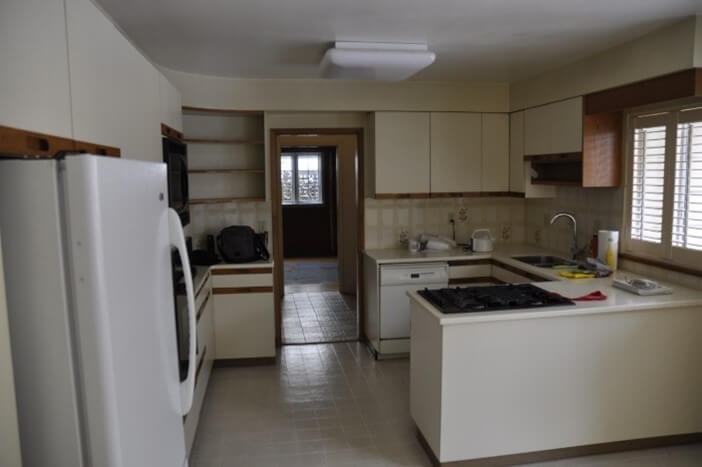
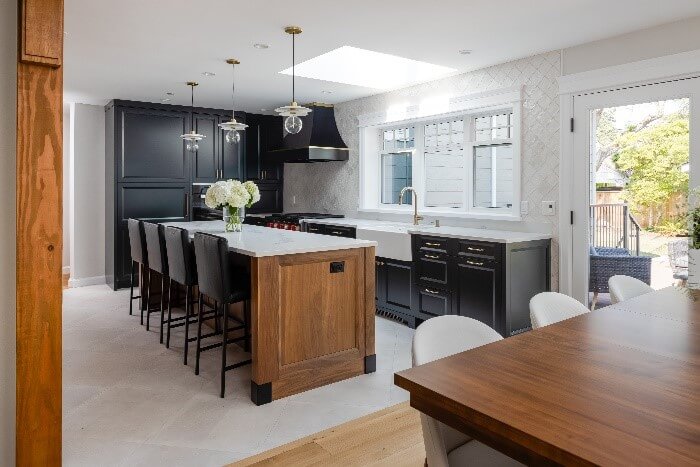
kitchen before
kitchen after

My House Design/Build Team, Surrey, British Columbia

Incentives for Home Energy Improvements Vary Across Canada
This is one more reason to work with a local Qualified Net Zero Renovator and Energy Advisor; they’re up-to-date on how to reduce renovation costs, operating costs, and the local incentive and financing programs (such as PACE) - and they may even do the rebate/incentive management on your behalf. Natural Resources Canada provides a directory of energy-efficient programs for homes, including retrofits and financial incentives. Qualified Net Zero Renovators will have experience working with energy advisors, and will help manage that aspect of your renovation.

Is a Net Zero Renovation
right for your home?

Renovating a home to Net Zero can entail significant costs for homeowners, but ultimately it is an investment in lifestyle and should reflect in the potential resale value of the home as well. Learn more about Net Zero incentive programs here.

DON'T SEE YOUR BUILDER OR RENOVATOR LISTED HERE?

ASK THEM FOR A QUALIFIED NET ZERO HOME AND WE CAN HELP THEM TO GET STARTED!

Learn More About Net Zero Homes

Net Zero Blog

Net Zero and Net Zero Ready Homes offer whole-house comfort, excellent indoor air quality, and superior energy performance using proven advanced technologies and construction practices. If you want to learn more about these revolutionary homes, then look no further than the Net Zero Blog.
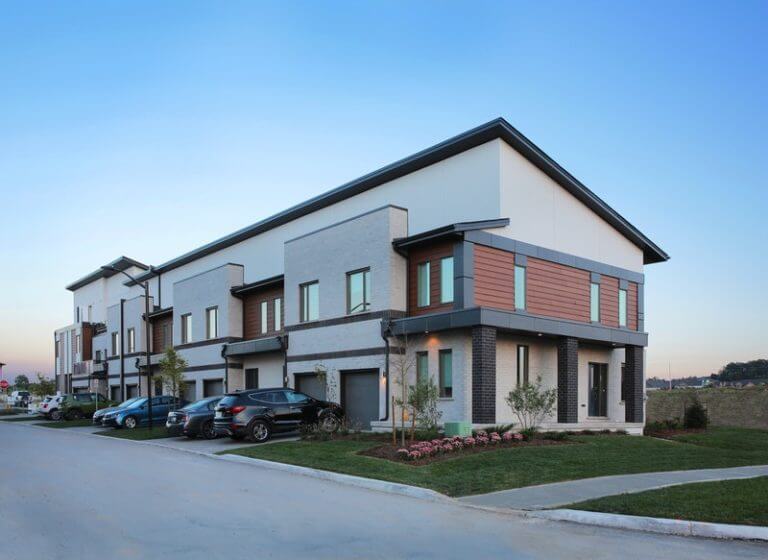
Sifton-exterior

What’s the Difference Between Net Zero & Net Zero Ready Homes?

If you’ve researched energy efficient homes, you’ve probably come across the terms “Net Zero” and “Net Zero Ready.” But what do they mean, and how are they different? We’re breaking down the differentiating features of a Net Zero and Net Zero Ready Home.

Modern living room with a large gray sectional sofa, glass coffee table, colorful artwork on the wall, open staircase with glass railing, and a mounted TV next to a fireplace. Space is bright with natural light.

Why Net Zero Homes Are So Comfortable?

Net zero homes are an excellent option for those looking for a comfortable, energy efficient space. By producing as much clean energy as they consume, net zero homes are up to 80% more energy efficient than typical new homes.
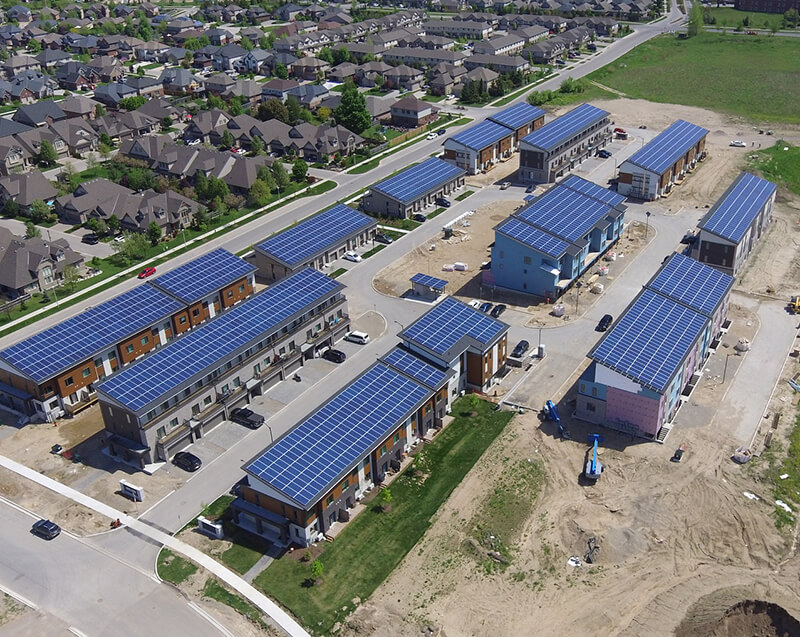
solar panels

The Science Behind a Net Zero Home

Every part of a Net Zero Home works together in harmony to create the ultimate energy efficient living space. Every aspect of the home, including the building envelope, mechanical systems, and renewable energy systems, works together as a system to ensure peak performance. Through advanced “building science” techniques, technologies, and products, builders can significantly reduce a home’s energy consumption. Here are the three main components of a Net Zero Home.
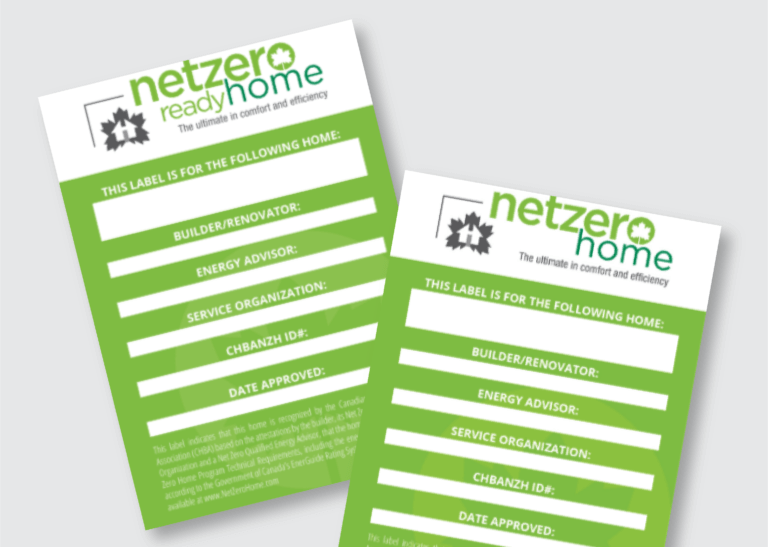
netzero ready home label

Are All Energy Efficient Homes the Same?

Thinking about building a new home or renovating your existing one? Investing in energy efficiency for your home will pay off in lower energy bills and can even increase the value of your home. But not all energy efficient homes are the same.

Net Zero Playlist

Don’t forget to check out the Net Zero Playlist on YouTube! Learn about the parts of a net zero home, the building envelope, mechanical system renewable systems, and more!


A Trusted Source

Don’t forget to check out the Net Zero Playlist on YouTube! Learn about the parts of a net zero home, the building envelope, mechanical system renewable systems, and more!

We know that as a smart consumer, you want reliable information from trusted sources. See what Natural Resources Canada and the Canada Mortgage and Housing Corporation have to say about Net Zero Energy Homes.

Net Zero Incentives

Did you know you can get a 25% rebate on your mortgage insurance premium?

It's true! Find out how much you can save when owning a Net Zero Home by visiting Sagen (formerly called Genworth Canada) or Canada Mortgage and Housing Corporation.

NZ-Family-Nature-Walk

Helping Homeowners with the Cost of Net Zero Energy

Renovating a home to Net Zero can entail significant costs for homeowners, but ultimately it is an investment in lifestyle and should reflect in the potential resale value of the home as well. CHBA has been working with the Appraisal Institute of Canada to bring best practices from the US Appraisal Institute’s Green and Energy Efficient Addendum to Canada to help ensure that investments made in energy efficiency are properly accounted for in the appraised value of a home.

For homeowners who are considering doing a deep energy retrofit, PACE (Property Assessed Clean Energy) is a financing tool that homeowners can use to upgrade their home’s energy performance or install renewable energy systems with no money down but rather repaid on a property's municipal tax bill over time. Currently Edmonton, Toronto, Saskatoon, and Halifax all have active programs, and many more municipalities are investigating or in the process of implementing PACE across Canada.

More About Pace

This document was developed by the Canadian Home Builders' Association (CHBA) in collaboration with: 

  1. PACE Canada
  2. Canadian Association of Consulting Energy Advisors
  3. Clean Air Partnership
  4. Efficiency Canada
  5. Morley Mountain Homes
  6. North Ridge Developments Corporation
  7. s2e Technologies
  8. Vancity Community Investment Bank 

Keys to Developing a Successful PACE Financing Program

As CHBA’s Net Zero Home Energy Labelling Program continues to gain momentum, with it now adding renovation and multi-unit dwelling to the program (in pilot stages) as well, it is clear that successful innovative financing programs could dramatically increase affordability and access for more Canadians to attain Net Zero levels of performance in their new or existing home.  PACE programming offers just such a solution.

PACE (Property Assessed Clean Energy) is an innovative financing tool that is transforming the economics of sustainability, making it both more profitable and more affordable than ever before. Since 2008 when first introduced in Berkeley California, across the United States PACE has financed over 8 billion dollars in energy efficiency and renewable energy measures and has grown exponentially despite significant financial constraints and without any need for tax dollar support.

Simply put, PACE allows property owners to borrow money to finance measures which serve to advance a “public good” agenda (typically energy efficiency and renewable energy measures) and repay the loan through a surcharge via their property tax bills.  Thus, allowing longer term paybacks and addressing upfront capital barriers that often undermine measure implementation. The PACE financing (loan) is secured via a tax lien and is attached to the property itself rather than the property owner. It therefore in no way affects the credit of the property owner—another benefit.

The simplicity of the concept belies its power. PACE makes previously unaffordable or financially unattractive energy efficiency and renewable energy measures both affordable and desirable.  

PACE loans have the following characteristics:  

  • the loan covers 100% of all costs (soft, hard and associated),  
  • the term and interest rate are set for the life of the loan,  
  • the loan is secured by a tax lien and can transfer to the new owner on resale,  
  • repayment terms can extend up to 30 years, and
  • finally, the loan does not accelerate in the event of a tax payment default or foreclosure, only the outstanding annual tax assessments become due and payable.  

Taken together, these features set PACE apart from other forms of financing and make it uniquely attractive to both homeowners and businesses.

PACE financing is applicable to both retrofit existing buildings and upgrade new construction projects, and to building owners to refinance existing PACE qualifying measures.  

With over 10 years of experience in the field to look back at, it is clear that PACE’s success is predicated not only on its financial characteristics but just as significant, on the ecosystem that has evolved to service and support it. The ecosystem consists of the enabling legislative framework and the stakeholders:  

  •  borrowers,  
  •  municipalities,  
  •  lenders (PACE Originators),  
  •  consultants,  
  •  subcontractors, and  
  •  administrators.  

Each stakeholder has a key role to play and the ecosystem must be structured to ensure that stakeholders’ needs and wants are met. Understanding the role of the ecosystem is essential; jurisdictions that have failed to support the ecosystem’s stakeholders have seen PACE programs underperform, or worse yet, completely fail.

Keys to Success for PACE Program Development

PACE’s success and the key role it will play in economic stimulus, job creation and climate change is predicated on creating a market for the private sector to “pull” the world towards a sustainable future by harnessing the sustainability sector to the profit motive.

Cisco Devries, considered to be the “founder” of PACE, said the following at a PACE conference in 2018. “There are only a handful of ways to structure a PACE program successfully and a multitude of ways to encumber it to the point of failure”. Given his background and history as a founder of Renew Financial, one of the largest PACE Originators in the USA, any jurisdiction considering setting up a PACE program will do well to heed his words and structure the ecosystem accordingly.

With that in mind, the following are key elements that create a successful PACE program. 

Unlimited Capital

Key PACE stakeholders (consultants, sub-contractors, and originators) will only fully support and promote PACE if they are confident that there is no limit on the availability of capital to service the demand they support and create. While private capital comes with what appears to be a higher interest rate than public funds, public funds are inherently limited, and private capital by contrast includes numerous administrative and other costs that are often externalized from public capital. Most compellingly, private capital is functionally unlimited in nature, and building PACE programs upon private capital is critical to the success of these programs. The uncertainty associated with public funds arising from the limits on capital availability and the risk of political manipulation has resulted in significant underperformance in publicly funded PACE programs. Businesses who would actively promote and service the PACE ecosystem will limit their engagement if they cannot be certain that their investment (time, HR, capital, marketing) will not be undermined by a lack of available funds. On the other hand, when specialized PACE lenders are involved, they use their ability to bundle and securitize their loans to ensure that PACE capital is always available to service the demand.

R-PACE & C-PACE

Residential PACE (R-PACE) and Commercial PACE (C-PACE) programs serve two completely distinct markets and must be structured accordingly.  

R-PACE is targeted to the homeowner. R-PACE’s success relies heavily on contractors’ engagement and proactive participation. Most homeowners who used PACE to finance a retrofit did not know about or consider PACE until the contractor brought it to their attention. For this reason, contractors’ needs must be prioritized in any R-PACE program. Furthermore, consumer protection measures must be incorporated. Striking a balance between protection measures, simplicity, approval process and timing, and ease of use by contractors is key to the success of any R-PACE program. For example, using RenoMarkTM members as a qualified list of contractors is a great and simple way to support consumer protection.

C-PACE is targeted to all other non-R-PACE property owners: commercial, hospitality, institutional, industrial, etc. The approval process is lengthy and significantly more involved than R-PACE and requires front end cost commitments to cover items such as costing, energy modelling, business case analysis, and mortgage lender approval, none of which are required in the R-PACE approval process. So while R-PACE approvals need to be free and quick (minutes to just a few days to confirm ownership, tax history and sufficient equity) to ensure contractors’ engagement, C-PACE approvals typically require front end capital investment and two to six months to prepare.   

Originators

These are the PACE lenders and fall into two categories: R-PACE and C-PACE. In both cases however, the lenders play a key role in seeking out and creating interested borrowers who become clients. This active engagement by the Originators plays a key role in PACE’s growth and development. The higher interest charged by Originators reflects in part the role they play in marketing and creating PACE projects. 

Role of Government

For government, the value of PACE is that it enables property owners to make investments that are in the public interest (energy efficiency, water efficiency, GHG emissions reduction, extreme weather resilience, etc.). To realize this value, the most important PACE success factor is confidence in the eyes of all other stakeholders (including property owners, investors, contractors, suppliers, and mortgage lenders): confidence that the program will remain a going concern, that the only changes will be to improve and streamline, that the program will be resilient to changes in political direction, and that risk is minimized (and, more specifically, that consumers are protected). This is best accomplished if the role of government is solely to set rules, and to ensure that those rules focus on ends rather than means. 

Where PACE legislation is too specific on means and methods, the resulting complexity will discourage communities from launching in the first place; what programs do launch will struggle to contain overhead costs. Where government serves as funder, the program is subject to budget scrutiny with each election cycle, and is at risk of cancellation or disruption in ways that erode the confidence that is so critical for program success; there is also the risk that the program will grind to a halt once the allocated funds are fully invested.

By contrast, PACE legislation that is focused on outcomes will encourage local programs that have minimal complexity and overhead costs, where the municipality can play as small a role as its elected representatives prefer. It will also open the door to private sector investment that effectively has no upper limit, especially if the legislation allows PACE loans to be securitized (bundled together and sold off) and the proceeds used to recapitalize the program. 

Connecting Capital to Public Good Measures

At its core, PACE programs are most successful when they respect that the most cost-effective performance measures are implemented when the ecosystem is designed to attract unlimited capital and deliver that capital at the lowest cost possible to the borrowers with the least amount of administrative cost in the transaction. Eliminating any measure which interferes with this equation yields successful PACE programs. Washington state’s recent C-PACE legislation serves as an excellent example; the approval process has been simplified to such an extent that the role of the 3rd party C-PACE program administrator has been entirely eliminated and replaced with a simple registration process that is handled by the existing municipal government infrastructure. 

Conclusion

PACE can play a significant role in the meeting Canada’s climate objectives, and support homeowners in their goals to reduce the GHG impact of their homes.  Further, PACE programs can support the development of a robust industry supporting energy efficiency in every local community.  This program also has the potential to develop a pool of patient capital toward energy efficiency and climate change mitigation. As the PACE model becomes more entrenched, there may be opportunities to expand the financing model beyond clean energy objectives, and support other public interest goals, such as creating more multi-generational homes, and supporting more seniors as they age in place.

Net Zero Home Awards

These homes are Qualified under the CHBA Net Zero Labelling Program (either Net Zero Ready or Net Zero, new or renovated home). The award recognizes excellence in high performance homes that have an appealing aesthetic, including overall exterior and interior design, use of building forms and materials, creative use of space, and functionality of floor plan. In addition to being entered in the Net Zero Home Award category, Net Zero Homes can also be entered into the corresponding New Home Award or Home Renovation Award category.

A modern, angular award trophy with a dark base, a blue and gold midsection, and a glowing golden light at the top. The year 2026 is written vertically on the upper right side, symbolizing achievement in Net Zero Homes innovation.

Best Custom or Renovated Net Zero Home Winner & Finalists 2026

WINNER - Best Custom or Renovated Net Zero Home
Hasler Homes Ltd., North Vancouver, BC: “Net Zero Lifestyle”
with Capital Home Energy Inc.

Best Custom or Renovated Net Zero Home
Whistler Builders, Whistler, BC: “Net Zero Mountain Haven”

Best Custom or Renovated Net Zero Home
RND Construction Ltd., Ottawa, ON: “Cunningham Park Modern”

Best Custom or Renovated Net Zero Home
RND Construction Ltd., Ottawa, ON: “Quarry Park Contemporary”
with Hobin Architecture


Best Custom or Renovated Net Zero Home
WrightHaven Homes Limited, Fergus, ON: “Cherrywood Estates”

Best Production Net Zero Home Winner & Finalists 2026 - Sponsored by Panasonic

WINNER - Best Production Net Zero Home
Land Ark Construction Ltd., Stittsville, ON: “Watercolour Westport” with Airtight Home Technologies, Building Knowledge Canada, Cavanagh Concrete, Gaylord Forest Products Ltd., Spectrum Kitchen & Bath Design, and Terra Nova Trus

Best Production Net Zero Home
Diamond Head Development, Squamish, BC: “Finch Drive”

Best Production Net Zero Home
Sterling Homes, Winnipeg, MB: “110 Butterfly Way - The Westminster”

Best Production Net Zero Home
Urbandale Construction Ltd., Ottawa, ON: “Natural Calm”
with FIG Solar and Homesol Building Solutions Inc.

Best Production Net Zero Home
Urbandale Construction Ltd., Ottawa, ON: “The Calmstone Home”
with FIG Solar and Homesol Building Solutions Inc.