


How CHBA Net Zero Homes Deliver Resilience
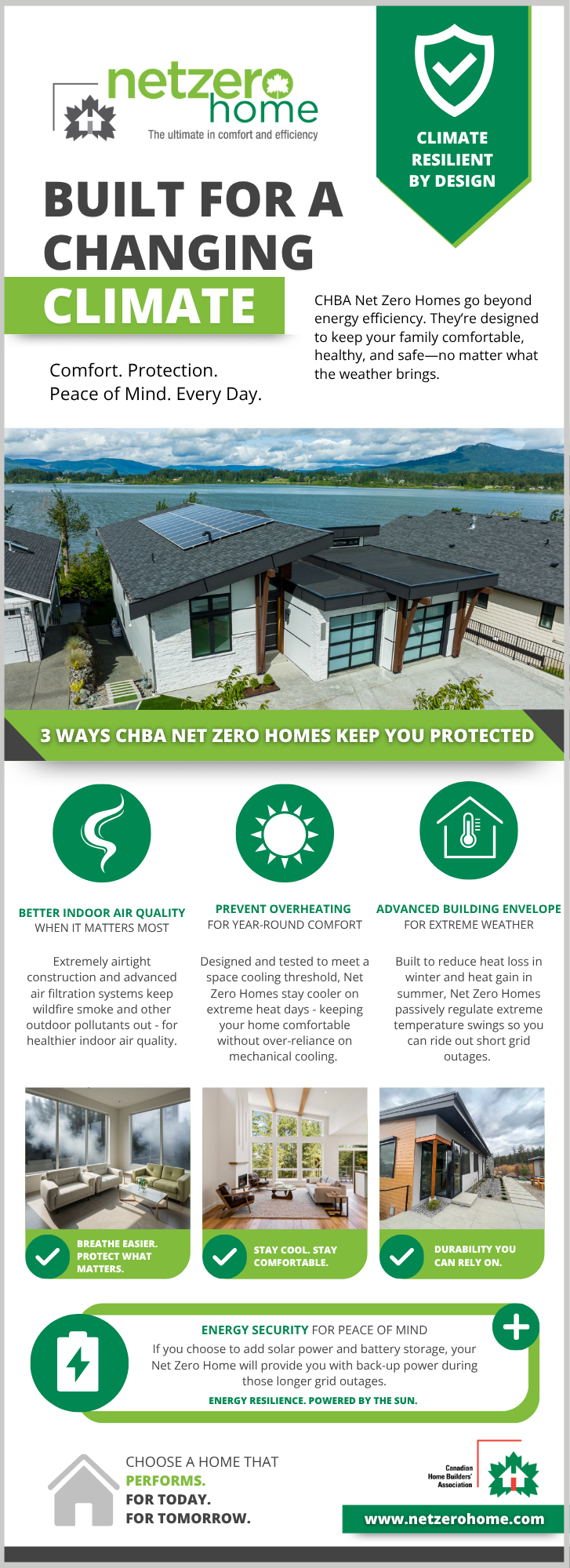
Extreme weather can affect our ability to stay healthy and comfortable inside our homes. Two major concerns are smoke from wildfires, which has affected Canadians across the country, and periods of extreme heat or cold.
Fortunately, CHBA Net Zero and CHBA Net Zero Ready Homes are built to go beyond minimum code requirements, and the energy efficiency measures required to earn these labels also offer benefits that enhance resilience to these challenges. Here's how:
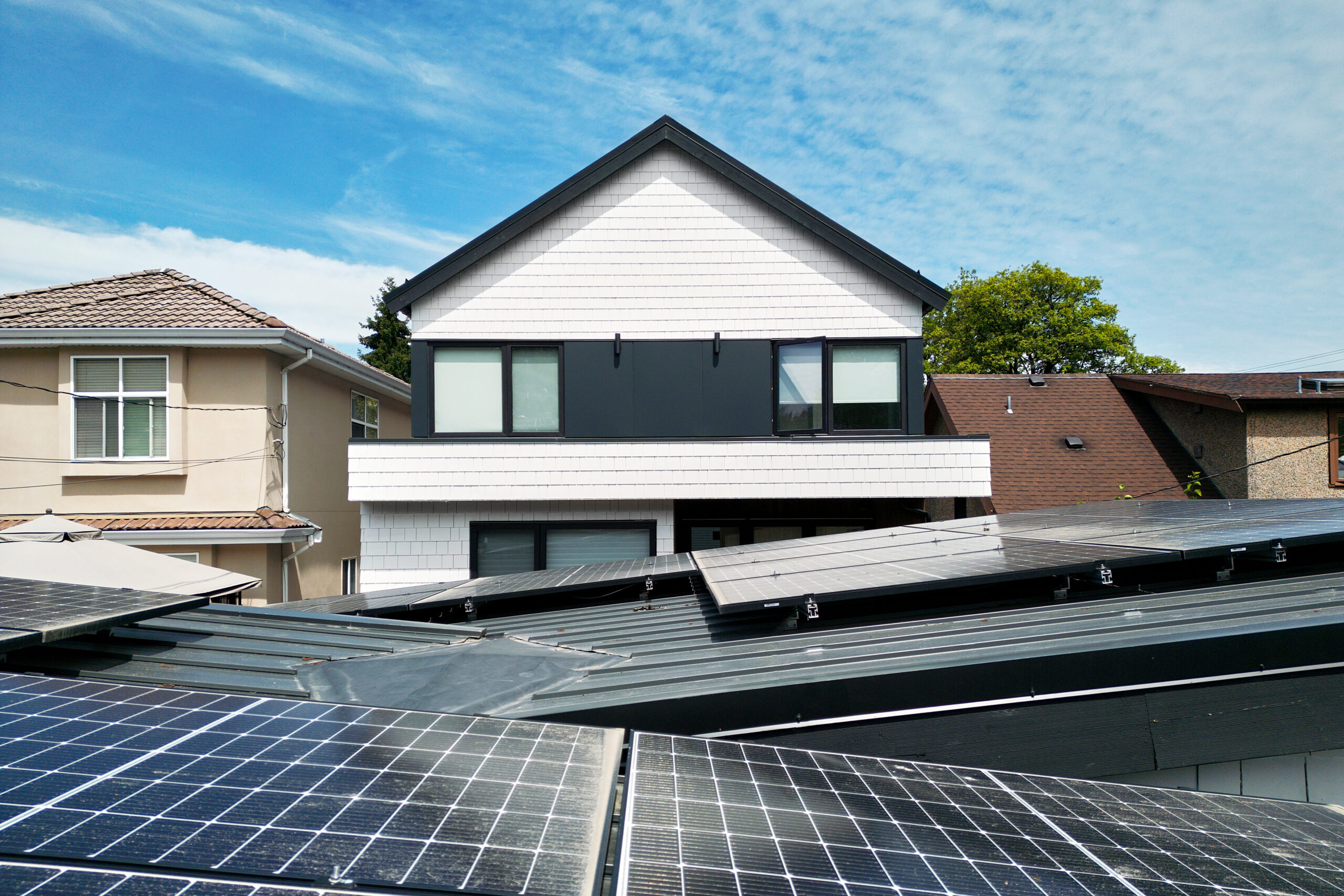
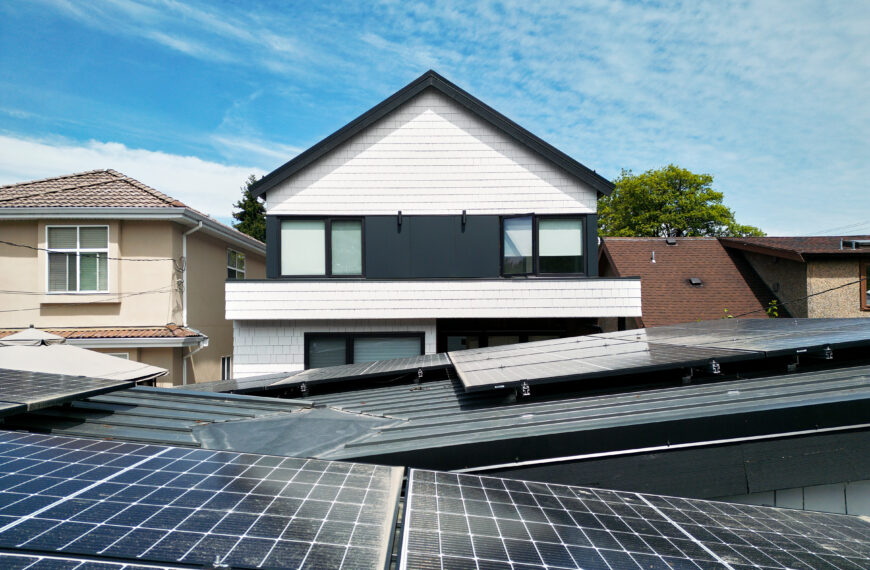
Glenmark Homes Ltd.’s “Everlight” in Vancouver, B.C., featuring rooftop solar as part of its high-performance design.
Limiting wildfire smoke ingress
CHBA Net Zero and Net Zero Ready Homes must meet strict airtightness targets. This helps reduce uncontrolled air leakage through the building envelope, including when outdoor air is affected by wildfire smoke. (You can learn more about the importance of airtightness in our “Airtightness: Why it matters in housing” blog.)
These homes also incorporate advanced ventilation systems that improve indoor air quality by regularly exchanging stale indoor air with fresh, filtered air from the outdoors, leading to a healthier living environment. These are called heat recovery ventilators (HRVs) and energy recovery ventilators (ERVs), and they’re required in all Net Zero and Net Zero Ready Homes qualified under the CHBA Net Zero Home Labelling Program. As such, a Net Zero/Ready Home provides exceptional indoor air quality by reducing allergens and asthma triggers like dust, pollen, and outdoor air pollution such as wildfire smoke.
Additionally, the CHBA Net Zero Home Labelling Program requires a minimum MERV 8 filter on space-conditioning systems that recirculate air (for example, a furnace). Homeowners can also opt for better filtration with MERV 10, MERV 13 or HEPA filters.
The airtightness, mechanical ventilation systems, and air filtration all work together to provide more control over how fresh air enters these homes, as well as how well it can keep wildfire smoke from entering the home. Check out our blog post “Why Net Zero Homes are healthier and more comfortable” to learn more.
Preventing overheating in summer
Extreme heat is becoming an increasingly important consideration for Canadians. CHBA Net Zero and Net Zero Ready Homes are designed for better occupant comfort and to limit the risk of overheating.
It isn't simply about installing a larger mechanical space cooling system. It’s done by ensuring the home is built with a highly efficient building envelope including better insulation, high-performance windows and excellent airtightness - as well as other best practice building science strategies - to limit uncontrolled heat gain. Good building design can reduce the amount of heat entering the home, helping create a more comfortable living environment during periods of extreme heat so that the home doesn’t need to rely solely on mechanical space cooling systems.
Staying comfortable during power outages
When a power outage occurs, periods of extreme cold can be more manageable if you live in a very energy-efficient home. The advanced building envelope features in a CHBA Net Zero or Net Zero Ready Home reduce the rate at which heat escapes or enters the home, allowing the home to maintain its indoor temperature for longer when the power is out. In a short power outage, this greatly reduces the risk of rapid temperature swings during both winter cold snaps and summer heat events.
When a homeowner chooses to add batteries and solar panels, a Net Zero Home will provide back-up power during those longer power outages, adding energy resilience to your home.
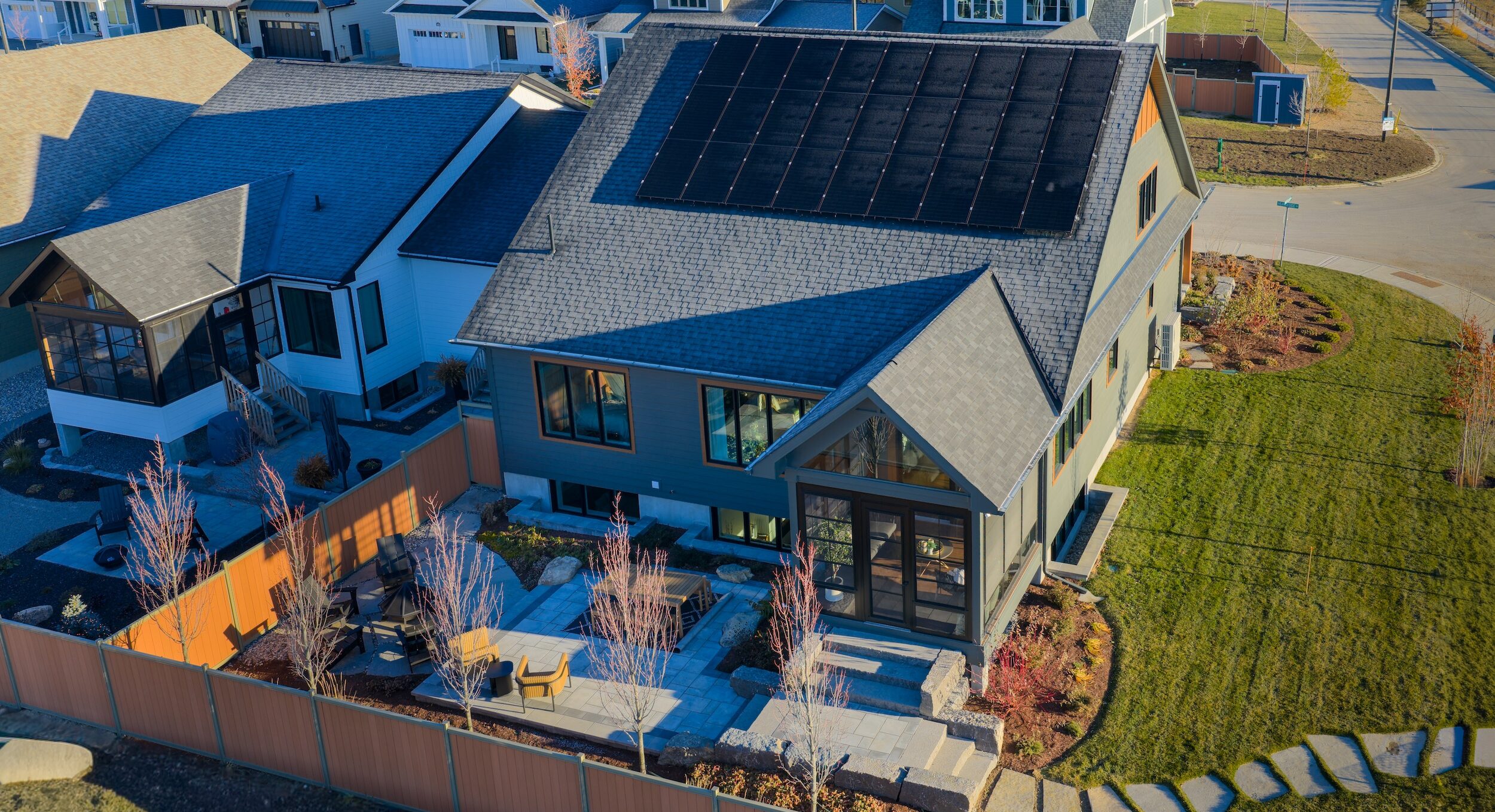
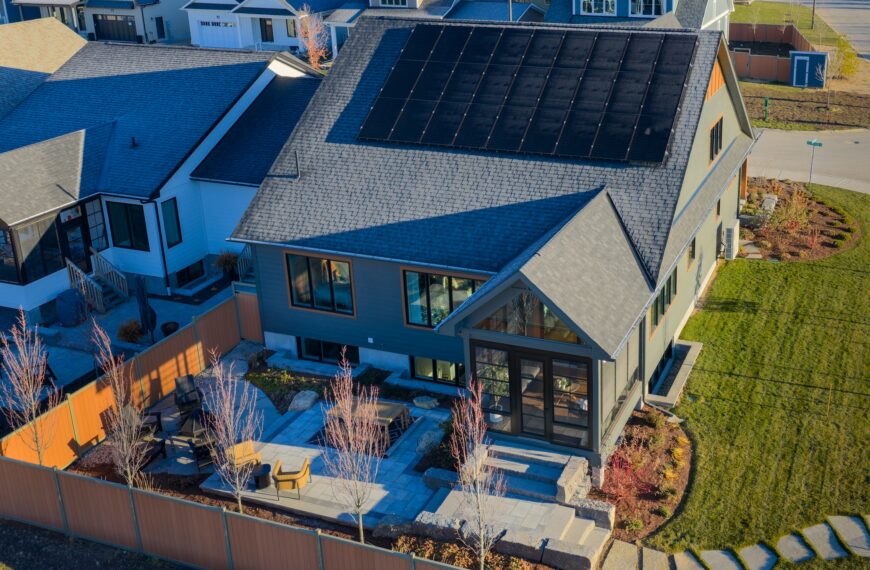
Land Ark Homes' Watercolour Westport model home in Westport, Ont., winner of Best Production Net Zero Home in the 2026 CHBA National Awards for Housing Excellence, includes rooftop solar paired with a Tesla Powerwall battery.
More resilience measures for those who need it
CHBA and the Institute for Catastrophic Loss Reduction (ICLR) are working together through the Resilient Homes Task Force to advance practical approaches to improving the resilience of Canadian homes against natural hazards such as high wind, hail, wildfire and basement flooding. Its goal is to create awareness among the residential construction and renovation industry and Canadians about what can be done to reduce risks to homes and families.
The Task Force has developed residential construction guidelines that support the incremental adoption of Good, Better and Best resilience practices by the Canadian home building, renovation and insurance industries. These materials were developed with the input and direction of the Task Force members and are being piloted by CHBA builder and renovator members.
The work of CHBA and ICLR brings together the insurance industry's focus on reducing risk and builders' and renovators’ expertise to help create safer, more resilient homes for Canadians.
The guidelines are available in English and French and can be found at iclr-resilient-homes-task-force.ca.
Found this helpful? Spread the word on social media
Explore more articles you’ll love

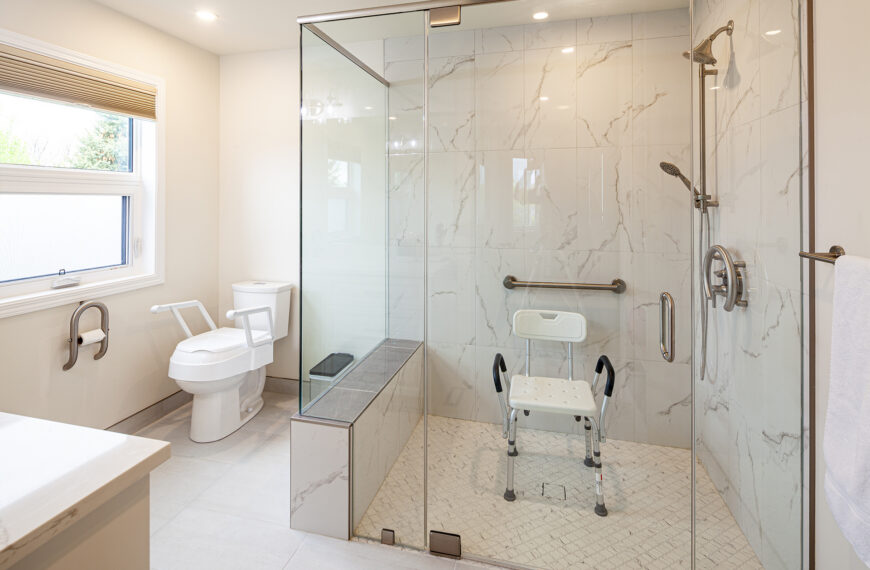
Planning Home Renovations for Aging in Place: What to Consider
Planning Home Renovations for Aging in Place: What to Consider Many people want to...
How CHBA Net Zero Homes Deliver Resilience
How CHBA Net Zero Homes Deliver Resilience Extreme weather can affect our ability to...
CHBA Fraser Valley Boot Bank helps students step into careers in residential construction
CHBA Fraser Valley Boot Bank helps students step into careers in residential construction CHBA...
Watercolour Westport Brings Net Zero Homebuilding to Cottage Country
Watercolour Westport Brings Net Zero Homebuilding to Cottage Country At the 2026 CHBA National Awards...
Setting the Standard: The Church Residence Wins Canada’s First-Ever Best Adaptiv Home Award
Setting the Standard: The Church Residence Wins Canada’s First-Ever Best Adaptiv Home Award When...